
Sustainable Networks
Position Your network for long-term success
The opportunity of sustainability
In 2020, the entire lifecycle carbon footprint of the ICT sector was estimated at 730-750 million metric tons of CO2, about 1.4% of total global emissions, with data centers alone accounting for around 45% of the sector’s carbon footprint. In terms of energy consumption, the ICT sector uses about 4% of global electricity, with data centers accounting for half.
While efficiency improvements have helped keep the footprint relatively stable, AI and cloud computing are expected to drive data center power demand by 160% by 2030.
The world is at a tipping point. Enterprises are under increasing pressure to reduce these emissions, with industry efforts focusing on energy efficiency, the procurement of renewable energy, and circular economy principles for hardware.
CommScope is meeting the moment with innovation, transparency and resolve. We view sustainability not as a constraint but as a competitive advantage, synonymous with operational efficiency and a catalyst for innovation.
Challenges
Complex, interconnected challenges
Every day we are reminded just how complex and interconnected the issue of global sustainability is. The relatively tiny ecosystem of the enterprise network is no different. Even the smallest change to the network infrastructure ripples through the environment, creating new opportunities as well as new challenges.
Here are just a few aspects of sustainability that network and facility managers must manage:

Measuring and tracking
Without clear, data-driven visibility into the network’s true environmental impact, it is difficult to optimize operations, demonstrate progress, and comply with reporting standards (ESG).

E-waste
A robust circular economy for network equipment—repair, refurbish, and recycle—is critical but challenging due to the specialized nature of components and the logistics involved.

Energy usage
Power for data centers, connected devices, and cooling systems continues to grow with AI, IoT, and cloud computing. Optimizing energy use, from the core to the edge, requires constant effort and innovative management solutions.

Supply chain
Improving network sustainability is complicated by global supply chains. Ensuring suppliers meet sustainability KPIs requires careful auditing, strong relationships, and transparency that can be difficult to manage.

Embodied emissions
The environmental impact associated with the extraction of raw materials, manufacturing, and transportation of IT assets before they are even used is a significant, often overlooked, part of the footprint.
How we can help
CommScope pillars of sustainability
Governance & ethics
Our people
Sustainable products
Responsible supply chain
Our business operations
Profitable Growth • Operational Efficiency • Portfolio Optimization
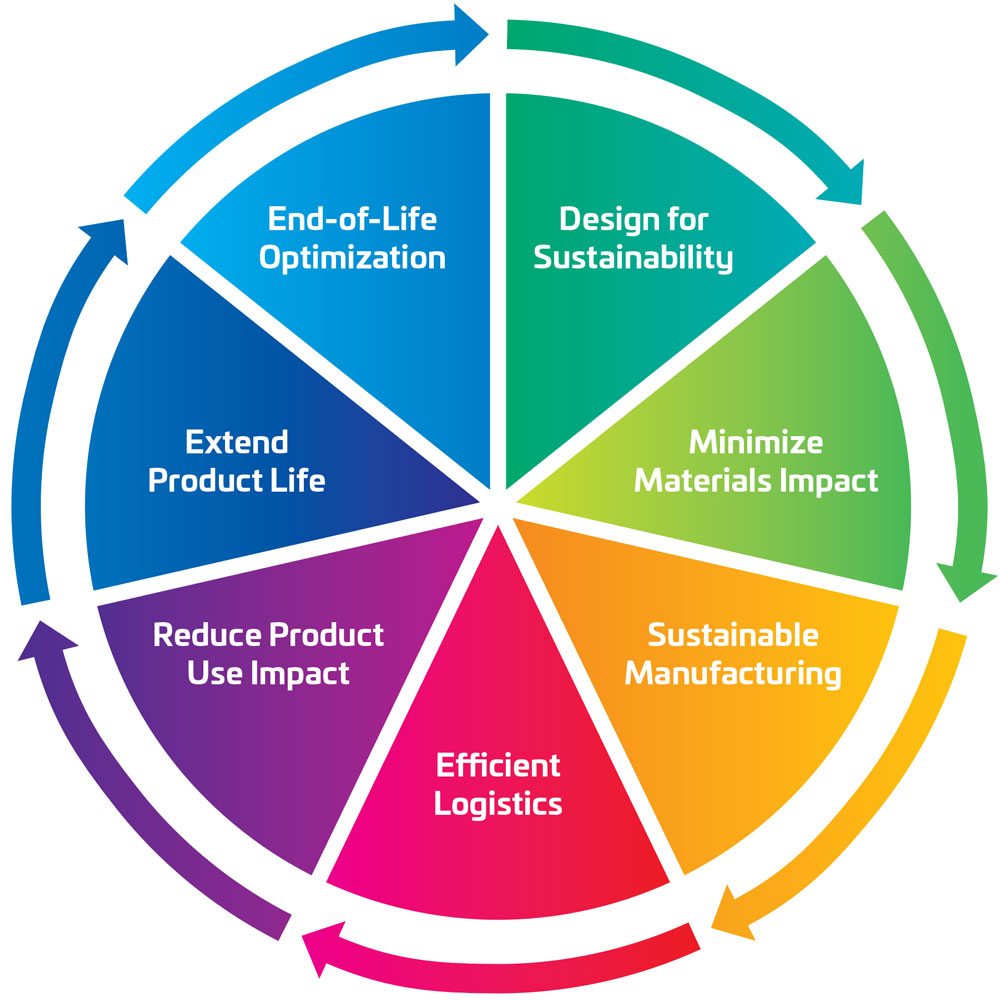
The lifecycle design approach
Our lifecycle design approach applies our sustainability focus to all phases of the product lifecycle.
- Design: Prioritize sustainability, aligning it with customer goals.
- Material impact: Where possible, use bio-based and recycled materials without compromising product quality.
- Manufacturing: Increase use of energy-efficient renewables.
- Logistics: Prioritize sea over air.
- Product use impact: Reduce the energy of the product.
- Product life: Design products that last longer.
- End-of-life: Implement processes to support circular economy.
Converting sustainability initiatives into tangible results
Strategic planning is only a first step. It takes corporate commitment and alignment—along with coordinated, data-driven implementation—to create results. Here are just a few examples of how CommScope is converting strategic initiatives into tangible results.
Initiative |
Result |
| Continue improving product sustainability profiles and reducing our overall greenhouse gas emissions GHGe | 44.1% reduction in market-based scope 1 and 2 GHGe and 42.1% reduction in scope GHGe vs 2019 |
| Use renewable energy to minimize environmental impact of manufacturing process. | 100% of manufacturing facilities in Europe use green electricity; 5%-10% reduction in emissions |
| Using the Aqueduct Water Risk Atlas, identify and target manufacturing sites with high overall risk levels. | 12.4% reduction in water withdrawal compared to 2019 |
| Use Lifecycle Assessments to pinpoint major emission sources in production of optical distribution frame products. | LCA complete for main product families; Product Carbon Footprint (PCF) lead time cut to two weeks |
| Assess and leverage opportunities to incorporate bio-based materials. | ISCC+ certification may be used to substantiate adoption of bio-based plastics; 20-30% emissions reduction |
Our science-based targets roadmap
Baseline |
Set target |
Plan |
Implement |
|
|
|
|
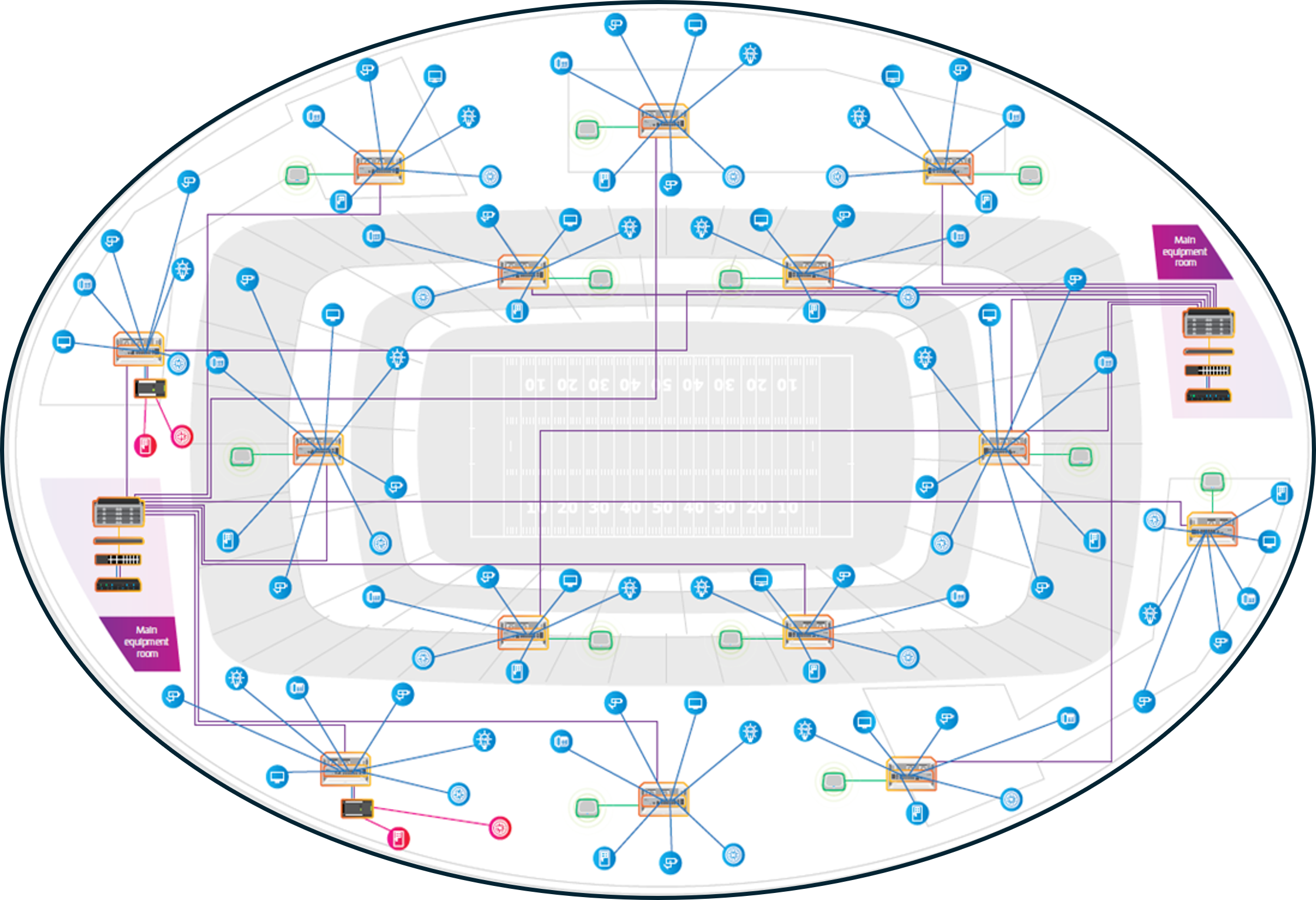
SYSTIMAX® Constellation™ platform: Commitment in action
Challenge
Create a data/power transmission platform to support all powered devices across the enterprise—one that is more streamlined, sustainable and cost-efficient than traditional LAN/IP networks.
Solution
The SYSTIMAX Constellation platform. It uses hybrid power/fiber cabling to deliver up to 1 kilowatt of fault-managed power and 10 Gbps of data from the main equipment room to compact distribution hubs located up to 500 meters away. Each hub is a mini TR or IDF, connecting and powering up to 50devices via Category 6/6A patch cords.
Key benefits (compared to traditional LAN/IP) Delivers 10x more power over 5x longer distances
- Simplified architecture
- 85% less real estate
- Low-impact installation
Sustainability impacts
- 59% less network copper, 66% less plastic
- Reduced raw material requirements
- Lower power consumption
Conclusions
Sustainability takeaways
Global sustainability and climate change are existential threats that cannot be ignored. As part of the problem, enterprise, campus and data center networks must be part of the solution.
By reimagining sustainability as a competitive advantage and catalyst of innovation, CommScope is helping energize the ICT sector to achieve more.
Using a methodically structured and strategic approach, we have developed a comprehensive sustainability plan based on the foundational pillars of: Governance and ethics, People, Sustainable products, Responsible supply chain, and Business operations.
By taking a sustainable lifecycle approach regarding our products, metrics and relationships, we are achieving significant results, reducing our carbon footprint and helping our customers and suppliers do the same.
Featured resources
Resources for faster deployment
Explore CommScope solutions for expedited deployment and ROI.

Philosophy