More Bandwidth
Getting the Most from Your Structured Cabling
Structured cabling, the great enabler
The relentless growth of connected devices, cloud computing and AI is stretching the limits of enterprise bandwidth. Digital transformation is accelerating. Network and facility managers must respond. It’s not just about handling more data; it’s about supporting higher power requirements and more demanding applications while keeping budgets, disruptions and environmental impacts in check.
In an era dominated by wireless connectivity, it’s easy to overlook the silent backbone of every high-performing network: structured cabling. Copper and fiber cabling systems remain the physical layer that determines how fast, reliable, and future-ready your infrastructure truly is. From enterprise LANs to hyperscale data centers, structured cabling is the bandwidth booster that enables digital transformation.
Challenges

What is bandwidth (really)?
Bandwidth is more than a number describing raw speed. In the context of your structured cabling network, bandwidth is a multi-faceted equation consisting of multiple variables, including:
- Channel capacity: The maximum rate at which information can be reliably transmitted over a specific communication pathway. While it’s measured in bits per second, channel capacity represents the theoretical maximum data throughput.
- Signal integrity: The ability of an electrical signal to pass through the cabling from source to destination without experiencing a level of degradation that would lead to data corruption or errors. Signal integrity is affected by multiple real-world variables like temperature, interference, mechanical stress and
data speed. - Application assurance: This guarantees support for current and emerging standards.
The role of headroom and performance
Standards define the minimum acceptable performance requirements for a given cable category or class (categories as defined by TIA and classes as defined by ISO/IEC). But for mission-critical applications, that’s not good enough. That’s where headroom comes in. “Headroom” refers to the extra margin above the standard—additional decibels of protection against crosstalk, insertion loss, and return loss. Here’s why having ample headroom matters.
Improves the reliability, speed, and quality of network cabling systems.
Industry standards typically set minimum performance levels that allow for an “acceptable” error rate that most vendors aim to meet. This, however, can slow networks and negatively affect business operations. In most cases, SYSTIMAX® exceeds these minimums by maximizing headroom across the channel. This translates to significantly better real-world performance: For example, a 3 dB margin isn’t just a small improvement, but it actually means the system is 100% better than the standard.
Ensures fewer bit errors, faster throughput, and higher quality data transmission.
Well-designed and properly installed cabling solutions with guaranteed margin provide robust, flexible systems that keep users happy and operations running smoothly. In contrast, systems that only meet the minimum standard—or that are poorly installed—can suffer from higher error rates, slower data, and frequent quality issues, leading to productivity losses and business risks. SYSTIMAX focuses on maximizing margins because it’s critical for delivering consistent, high-quality performance for the most demanding applications like HD video and VoIP.
Other benefits of more headroom
- Fewer bit errors, higher throughput, lower transmission overhead
- Allows for future applications without
rip-and-replace - Absorbs performance drift from aging, patching, and harsh conditions for a more environmentally resilient network
Learn how Category 6A cabling’s headroom can give you a longer runway.
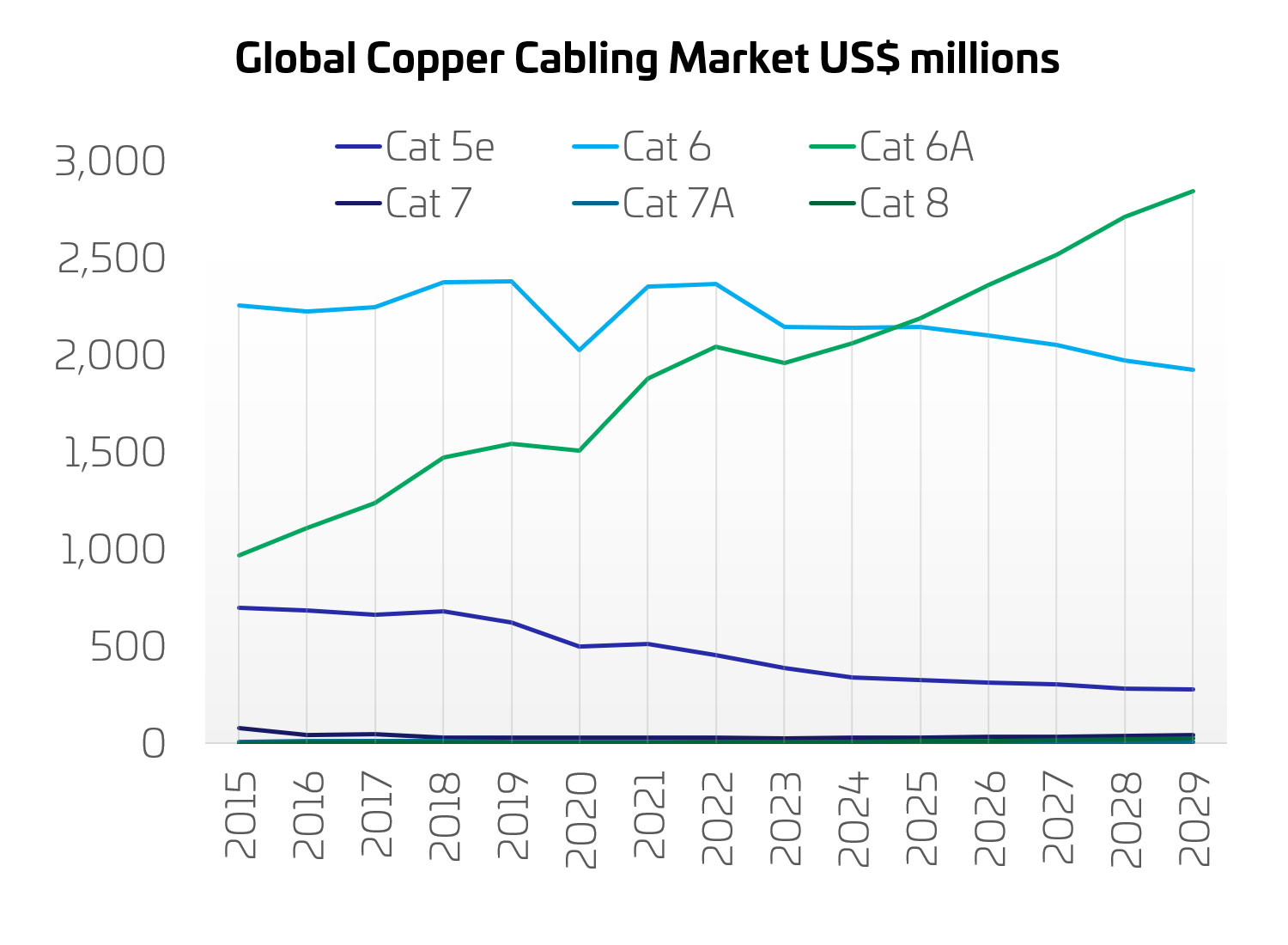
Copper is still the workhorse
Despite fiber’s dominance in backbone links, copper remains essential for:
- Power over Ethernet (PoE), which can deliver up to 100 watts for smart lighting, security cameras, IoT and more.
- Short runs of horizontal cabling, which are very cost-effective for offices and campuses.
- Medium runs of new extended reach solutions, which provide alternatives to go farther than the traditional 100 m.
- Multigigabit Ethernet, which supports 2.5G/5G/10G speeds over existing copper plant.
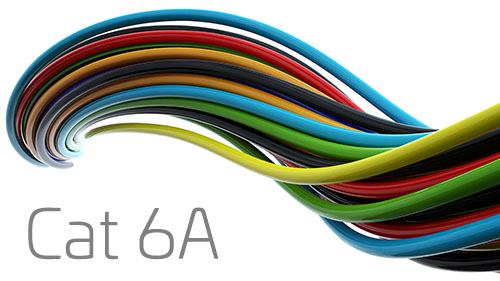
Category 6A is the sweet spot for new installations. It offers predictable alien crosstalk performance, lower losses, and headroom for emerging applications like
Wi-Fi® 7 and high-power PoE.
Fiber: The bandwidth horizon
For backbone and high-density environments, fiber provides virtually unlimited bandwidth. But even fiber systems benefit from structured cabling principles—modular design, standardized connectivity, and lifecycle assurance.
IT, OT or converged
Older enterprise networks were typically designed to support informational technologies (IT) oroperational technologies (OT), with each having unique requirements. While discrete IT and OT networksstill exist, buildings and campuses are quickly transitioning to converged networks that enable all IT andOT services and devices to be supported by one network. Here’s a quick breakdown of each type.
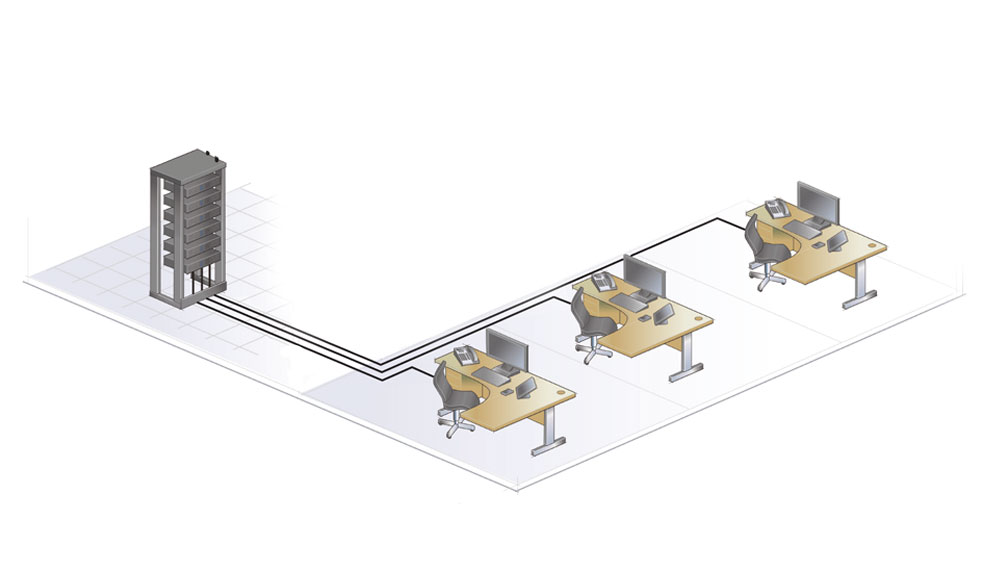
IT networks require high bandwidth and low latency to effectively support cloud computing, video conferencing, and data analytics.
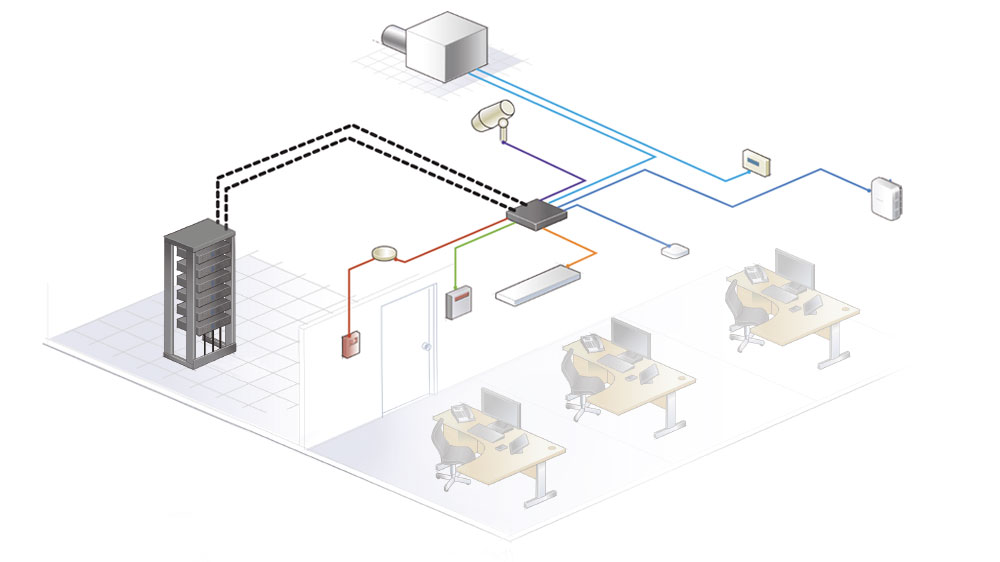
OT networks demand consistent bandwidth and real-time communication for building automation, access control, and industrial sensors.
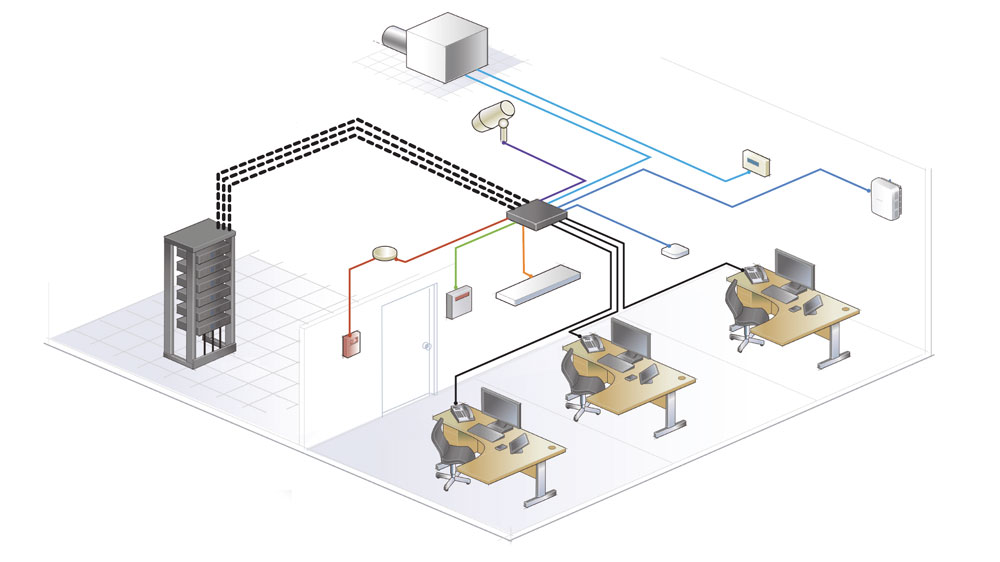
Converged network designs must balance capacity, reliability, and segmentation to meet both IT and OT requirements securely and efficiently.
How we can help
Scale the bandwidth ladder with CommScope
Bandwidth demand rarely stays static. Customers should plan for three to five technology refresh cycles without ripping and replacing cabling. This means:
- Choosing a specialized Cat 6 system such as GigaSPEED® XL5® (to support multigigabit) or a Category 6A solution such as GigaSPEED X10D® (to support 10GBASE‑T).
- When copper runs were restricted to 100 m length, it was usual to consider fiber backbones for long-term scalability and high-speed interconnects.
- With extended reach solutions, customers have more design flexibility to deploy copper-only solutions and get the necessary bandwidth.
- Designing with modular components (patch panels, connectors) for easy upgrades. Check out our InstaPATCH® solutions for more information.
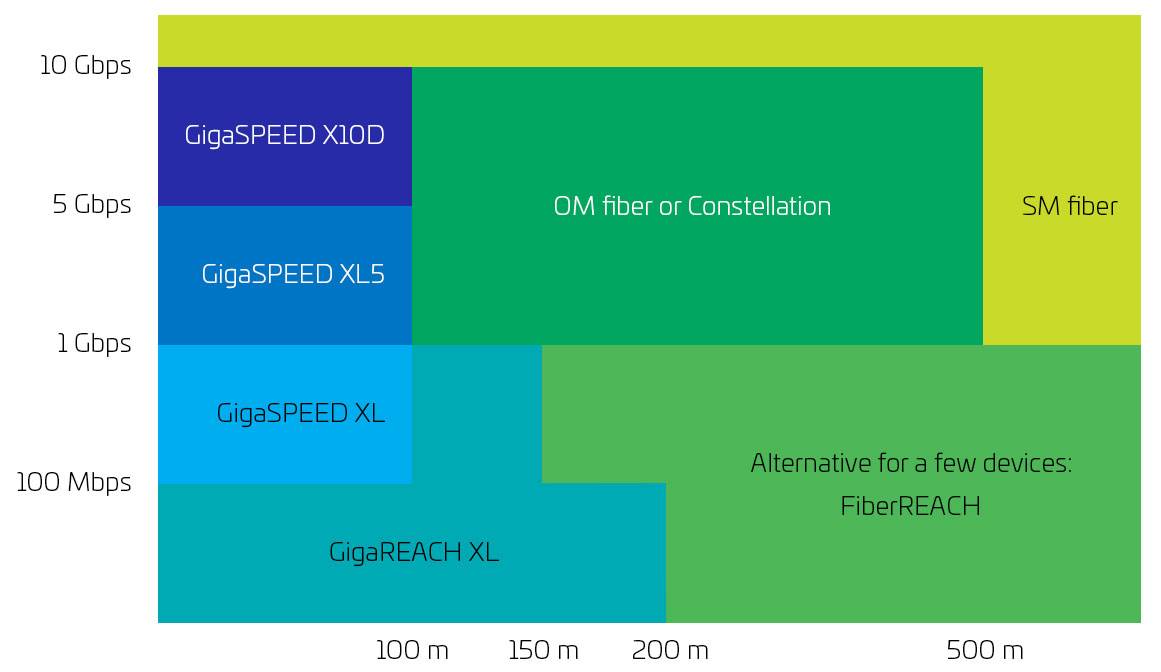
CommScope’s comprehensive portfolio of copper and fiber cabling solutions gives you the bandwidth and performance to continue adapting and evolving your enterprise network.
Conclusions
Key takeaways of higher bandwidth
CommScope’s SYSTIMAX structured cabling solutions are engineered to meet and beat industry standards—often before they’re written. With Application Assurance and performance warranty, you’re not just buying cable; you’re investing in a platform that scales with your business.
Extra headroom = More peace of mind
Think of headroom as your insurance policy against uncertainty. Standards evolve, devices proliferate, and workloads intensify. Extra margin helps extend the lifespan of your cabling plant so it won’t be the bottleneck when the next wave of technology hits.
Ready to upgrade?
Explore our Category 6A and Multimode Fiber pages to see how CommScope delivers structured cabling that’s not just compliant—but confidently ahead of the curve.
Get in touch
Learn more about how we can help you get the most from your enterprise network investment
Case studies
See how CommScope is helping customers like you solve their toughest bandwidth challenges.