Automated Network Intelligence
From Documentation to Real‑Time Decisions
Enabling structured cabling’s hidden superpower
Structured cabling was a breakthrough development for network infrastructure design. Among many other benefits, it opened the door to improved network management.
- More predictable performance and easier troubleshooting
- Support for multiple technology refreshes without major rip-and-replace
- Moves/adds/changes tracked via spreadsheets or other manual methods
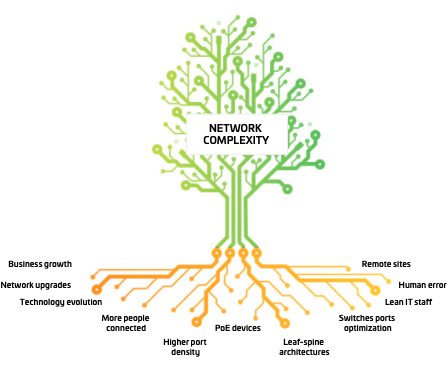
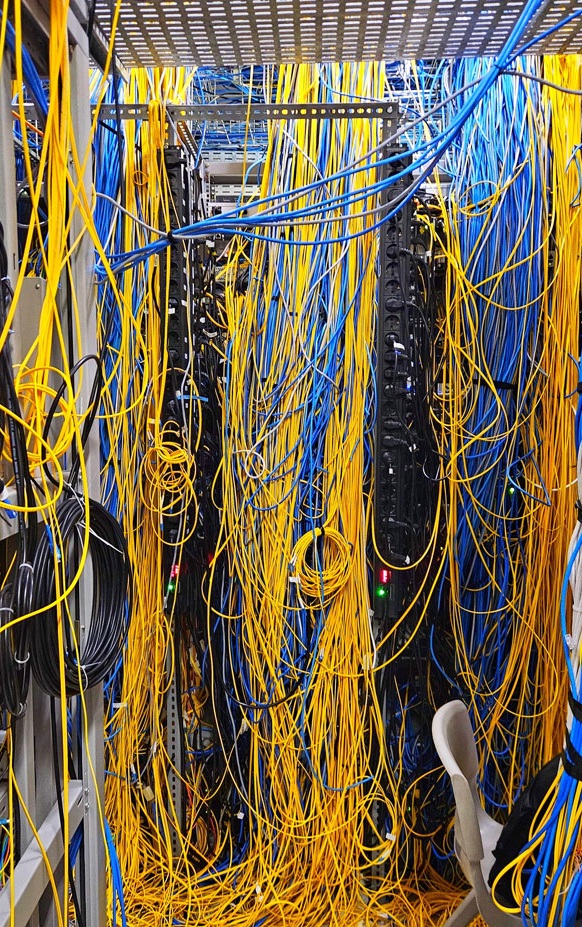
Leveraging these capabilities, however, requires real-time visibility of the connected environment—structured and fiber cabling, PoE devices, port status and capacity, and more. As network density and diversity grow, tracking infrastructure changes using manual spreadsheets invites a significant risk of error, and that’s only one of many key network management challenges facing facility and network managers.
Challenges, drivers and objectives

Continuous infrastructure visibility
Driver: Rising site/edge buildouts and device density increase risks with manual updates
Objective: Eliminate blind spots, stale spreadsheets; identify active/idle ports, patched circuits and locations, and connected devices
Improved change management
Driver: Staffing constraints and remote or smart‑hands models increase the cost of errors
Objective: Reduce the time and risk of moves/adds/changes; provide technicians unambiguous instructions and verification

Incident response
Driver: Outages and security gap exposures from physical changes drive demand for automated rack/port alarms
Objective: Real‑time alerts on unexpected patching, rapid root‑cause tracing, and faster MTTR
Capacity planning, asset optimization
Driver: Port counts growing faster than budgets, increasing need for capacity management
Objective: Identify stranded ports and port capacity and act before thresholds are crossed

Physical layer security
Driver: Increasing audit scope for IT/OT
Objective: Identify all changes, when and where; immediately detect unauthorized patching, meet physical network security standards

Sustainability, operating efficiency
Driver: Explosive growth of MTDCs, campuses and remote edge
Objective: Manage distributed sites, guide remote hands, and administer systems without being on‑prem

IT/OT convergence, ecosystem integration
Driver: Unified assurance and automation require shared data models
Objective: Blend physical‑layer truth with NOC/ITSM, DCIM, BMS/physical security tools; support OT use cases like OSP risk awareness and fiber‑fault geo‑location

Standards‑based procurement and commissioning
Driver: Network and facility managers are under pressure to reduce project risk and ensure benefits are realized from day one
Objective: Specify, implement and operate per ISO/IEC 18598 best practices (design, installation, operation), using accredited partners

“Just‑enough” solution
Driver: Many enterprises want immediate wins (capacity, alerts, remote guidance) with minimal setup, then scale later
Objective: Find a lightweight, cost‑effective management solution that goes beyond manual audits when full AIM is overkill
How we can help
See more, do more with CommScope network intelligence solutions

imVision®
Automated infrastructure management
Monitor and document your cabling infrastructure while tracking the location of all connected network devices. Actionable, real-time data and performance insights enable you to optimize capacity, availability and efficiency.

VisiPORT™
Real-time port-level monitoring
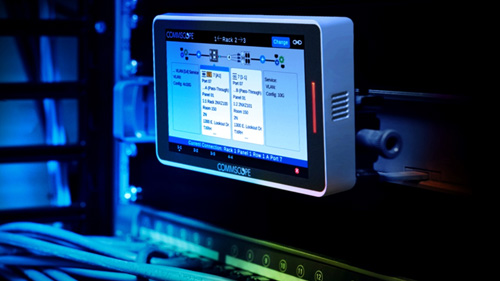
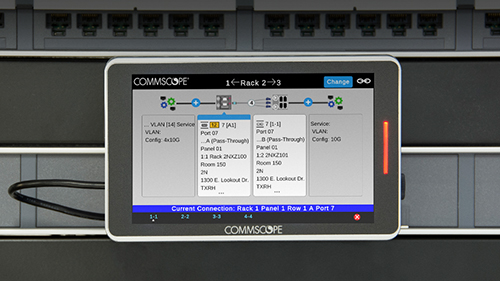
Intelligent panels and port sensors automatically detect all port activity, fiber and copper, alerting you when there’s insufficient capacity, unauthorized patching, device availability and more.
Real-time intelligence for real-world challenges
Customer need |
VisiPORT |
imVision (AIM) |
Real‑time port status and capacity |
x |
x |
Remote LED guidance |
x |
x |
Threshold alerts / incident notifications |
x |
x |
Device discovery and physical‑to‑logical mapping |
x |
|
Guided work orders and closed‑loop MACs |
x |
|
IT/OT convergence, multi‑system integrations |
x |
|
Enterprise‑wide reporting/analytics and audits |
x |
x |
OSP/geo features and advanced workflows |
x |
|
Capacity planning, asset optimization |
x |
x |
Physical layer security |
x |
x |
Sustainability, operational efficiency |
x |
x |
Use cases |
Environments requiring a simplified, standalone automated port monitoring solution, without the full capabilities of an AIM solution |
Environments requiring full-featured AIM capabilities including system integration, device mapping, advanced workflows |
Manage your powered connections
The imVision AIM solution plays a key role in managing PoE connections by providing real-time visibility, documentation, and control over data and power delivery, including power sourcing equipment (PSE), across structured cabling systems.

Real-time PoE control
The imVision solution tracks:
- The number of cables per bundle
- Cables connected to PSE
- Cables actively delivering PoE
- PoE consumed and allocated per cable

PoE service provisioning
imVision System Manager enables:
- ID of PoE type when provisioning services
- Automatic searching for open ports that meet required power level
- Re-routing/upgrading when desiredPoE level is unavailable

Dashboards and analytics
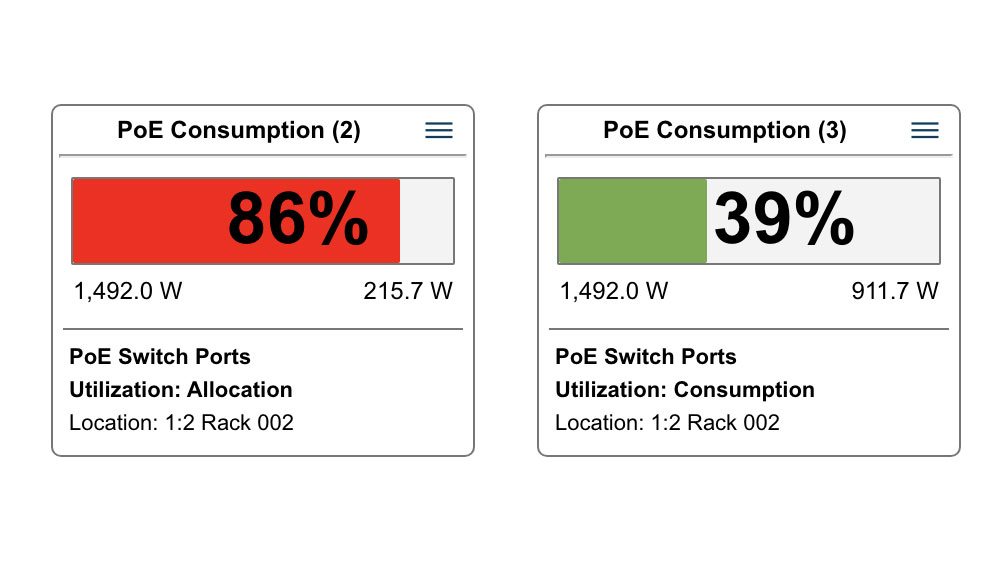
imVision dashboards show:
- PoE availability per outlet or location
- Percent of outlets with PoE access
- PoE switch port capacity/utilization
- Underutilized PoE switch ports
Standards compliance and safety
By monitoring bundle sizes and power distribution, the imVision AIM solution helps ensure compliance with TIA®, ISO®, and CENELEC® standards that recommend limiting bundle sizes (e.g., to 24 cables) to prevent overheating. Overheating can degrade cable insulation and increase attenuation, potentially leading to performance issues or warranty liabilities.
Take network intelligence outdoors
imVision, the leading automated infrastructure management (AIM) solution for in-building networks, is also ideal for managing your outdoor service provider (OSP) fiber links, device connectivity, and points of presence (PoPs).
OSP cabling documentation
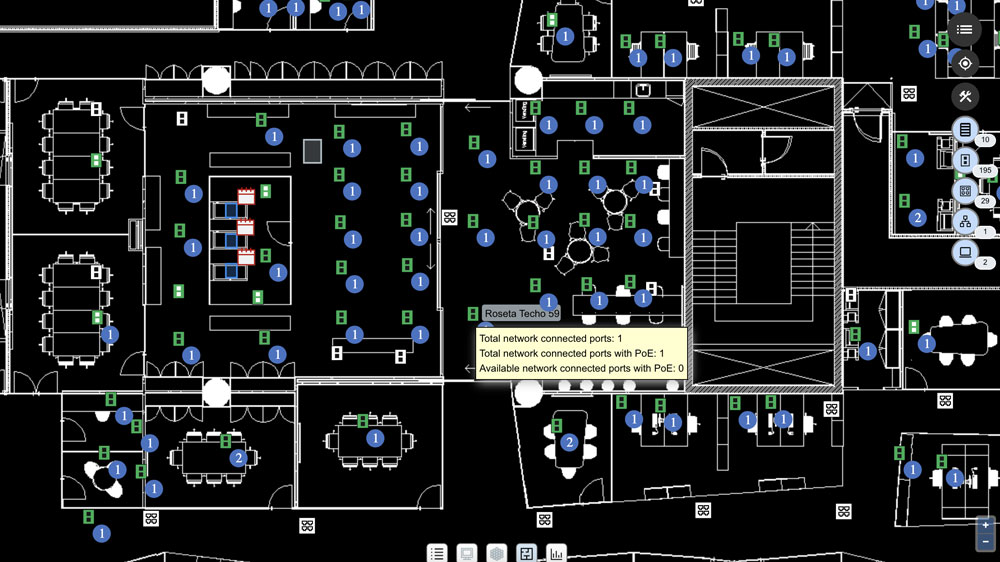
The imVision solution includes a dedicated OSP cabling feature that simplifies the documentation of outdoor fiber links. This is particularly valuable for managing thousands of ports including PoE, across multiple points of presence.
Electronic work orders, real-time alerts
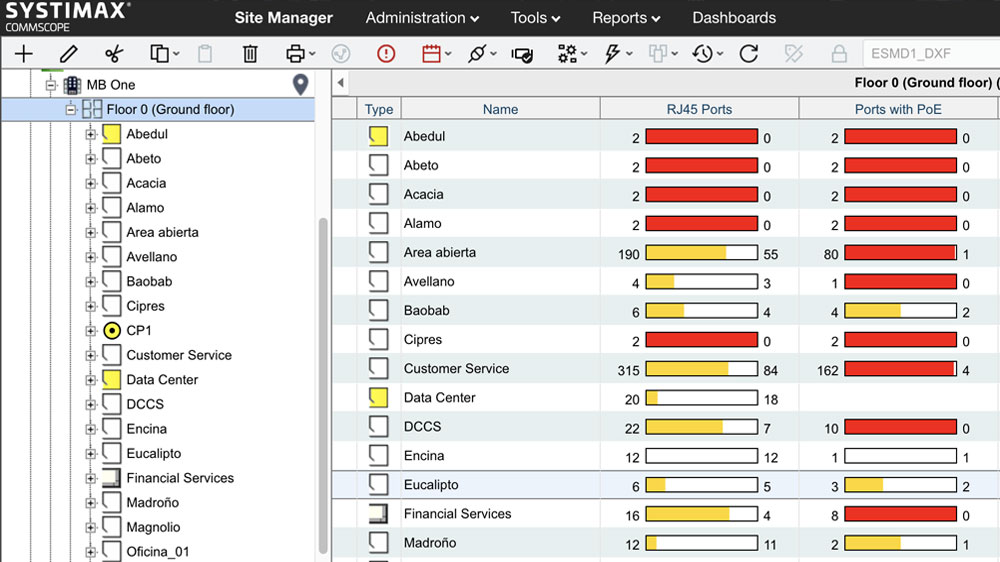
Electronic work orders streamline the process of moves/adds/changes and reduce human error. Send automated event alerts for critical circuits to multiple stakeholders to speed response, minimizing downtime for hard-to-reach outdoor connections.
Centralized visibility, accountability
By maintaining a centralized database of all OSP connectivity, imVision AIM enhances visibility and accountability. Online records make it easier to locate and verify fiber paths, improving operational efficiency and customer satisfaction.
Conclusions
Key network intelligence takeaways
AIM has transformed structured cabling from a static, manually managed asset into a dynamic, intelligent infrastructure that delivers real-time visibility, automated documentation, and proactive control. By eliminating human error in moves, adds, and changes, AIM reduces downtime, accelerates incident response, and helps ensure compliance with security and sustainability standards. It enables IT/OT integration, supports remote operations and provides actionable insights for capacity planning. The results are lower operational costs and improved network resilience. For today’s modern, high- density, and mission-critical environments, AIM is not just a convenience; it’s a strategic enabler.
Without AIM |
With AIM (e.g., imVision) |
|
Documentation |
Manual spreadsheets |
Automated, real-time updates |
MAC accuracy |
High error risk |
Guided, closed-loop workflows |
Incident response |
Reactive |
Proactive alerts and dashboards |
Compliance |
Manual audits |
Continuous audit trail |
Sustainability |
Limited |
Integrated into lifecycle ops |
Get in touch
Learn more about how we can help you get the most from your enterprise network investment
Case studies

Equinix UK
Discover how CommScope and Equinix work hand in hand to provide client connectivity across the globe for the best user experience

Featured resources